Tuesday, July 26, 2016

Bean, beans the wonderful fruit

In a never ending quest to find peace and balance in my daily life, I have hardly found time to breath and sleep never mind write. I have been busy in the past weeks working my two jobs (I kind of cannot wait for the summer to be over) and still finding brief quiet moments to make knit hats, mittens, socks and some aprons that will be up on etsy in a month. I was rewarded on Sunday though when I got home from work and spent some time working in my garden to discover that not only would my blackberries be providing fruit in a few days but my beans would be providing part of my dinner that night.

Working in the garden can be as soothing to me as knitting and sewing unfortunately my strength wavers fast in the sun and so I have to remember to take a break as I work. It is one of those task I remember doing as a young child, helping my mom after my father had tilled the bed. I remembering help to drag the hoses and watering pots across the driveway to water our pretty decent size bed, weeding, and then harvest. I guess that sense of duty is still weighing on me a little since on Sunday I  only wanted to curl up on my couch and sleep but I pushed forward to water my garden since the little rain we got wasn’t enough to water my food.

Much to my pleasure my push was rewarded, I found beans. Beans were always something my family grew. So much my mother’s parents were called G&G Beans by us grandkids. Even at his apartment my grandpa still keeps his beans. Underrated they are beans, coming in all shapes, sized and colors, and Archaeologist have evidence of them being grown for over 7,000 years. In Native American culture the bean is brought by a crow with the corn and pumpkins. Tribes in the Northern parts would plant their corn in mounds on top of the local fish. On the coast line of New England when the herring (alewife) ran up river it was not only a sign to plant the corn but the very fish that would fertilize their food. They then would plant the beans around that and then pumpkins to cover them. It was a tradition that they taught to the first settlers that we call Pilgrims. One book I read even credited the Natives with teaching the English how to cook the beans and I will give credit where it was due but considering there were cook books with cooking recipes for beans already from England and Holland that predate the English’s arrival so that can be tossed out as a thought.

The first harvest of the year


Underrated the bean may be but tasty and vast in types it truly is. They have inspired rhymes and stories, from Jack and the Bean stock to that lovely rhyme "bean, beans the wonderful fruit the more you eat the more you toot," For my family this vegetable has held more meaning and it will often hopefully grace our garden beds for generations to come because after a long day at work on Monday coming home to fresh green beans made a tolerable day not only uplifting but superb. 

Tuesday, July 19, 2016

Odd Tools


Every crafter has their perfect tools. Their favorite pair of scissors, favorite seam rippers, books, and those items we just always seem to be reaching for. I have a collection of them near all of my work stations. I have the usual, scissors, needles, pins, seam rippers, a bin for trash threads and a pin cushion besides my sewing machines. Where I knit, I have stitch markers, needles, pins, scissors of varying sizes, crochet hooks, treads, a bin for trash yarn and thread and hand lotion.

We all also have some random weird tools that we keep by use when we work. Here are some of mine

My knitting work space by my couch
  • Flashlight - getting a closer look at the machine when it is being weird.
  • Q-tips - for cleaning out lint
  • Tweezers – for spaces that my fingers don’t fit
  • Toe spacers – perfect for holding my bobbins without having to worry about thread tangling
  • Safety pins – they are just handy for keeping around
  • Purple Thang – I have talked about this before in a previous blog, I still love it.
  • A pen, and paper because you never know when you need to jot yourself a note.
  • A screwdriver – if you have an old machine or even a new one, (new ones usually comes with one) and changing the needle is easier if you have one. For older machines you sometimes need one to get to all the spots that need oiling.
  • An emery board for when you break, accidently cut or sew through your nail.
  • Lotion because when working with softer materials I don't like the feeling that my hand is snagging the fabric.
  • A place to put scrap fabric, yarns and threads

My current work space on my dinning room table. These need to be kept organized to be moved when mom comes to visit.


Got any useful tools you keep near your work space that have proven helpful? Would love to hear.

Work space near my vintage machines, screws, fashion discs for the easy touch, q-tips and a pill bottle for old needles.


Tuesday, July 12, 2016

Kitchen cooking hack : eggs


When I was little my brother and I spent a lot of time watching PBS, “Are you being served?”, The bucket woman, This Old House, Norm’s work shop, the best of the Ed Sullivan show, the many children’s shows available during our childhood and one wise woman named, Juliet Child. Everyone knows when she married she couldn’t even boil an egg. I will also be honest with you, four years ago neither could I. I had three eggs, scrabbled, omelet and omelet scrambled. Then four years ago I was at a job interview and they were asking about my gardening skill, my sewing skills but although they told me I would have to cook they asked me nothing about my cooking skills. I remember praying that they didn’t ask me if I knew how to cook or bake. I didn’t know how to tell them I knew how to do a blind hem stitch but couldn’t even boil an egg.

Once training began though I told my trainer I didn’t know one thing about cooking. I knew how to follow directions but other than that forget it. She smiled and told me I would be alright like other things she would be there to teach me. One of the first things she did get to teach me was how to boil eggs and she showed me a really simple and easy way not only to time it but also how to tell they’re done. Simple words place eggs in water, bring to boil for 5 minutes, let sit in hot water for 30 minutes, pull out and watch the steam rise, if the water the wicks away from the eggs with-in few seconds they’re done.

In modern words because this was us using an open fire, I have it down to this and you will always come up with perfect eggs.


Place eggs in water and bring to a hard boil. If you are in the kitchen you will hear it.


Set the timer for 4 minutes. When the timer goes off turn off the burner.

Set the timer for another 4 minutes.  Meanwhile set up a bowl filled with cold water. I add a little ice to my water.


When the timer goes off, scoop the eggs out of the boiling water and if you have kids around it can be fun to let them watch water steam off the eggs. Place them in the ice water and let them sit for 30 minutes.


Congrats, perfect hard boil eggs.

Maybe my next food blog will be my egg salad.

Tuesday, July 5, 2016

Sewing wisdoms

In light that I recently did a bit on wisdoms I had discovered with knitting, I thought I would share some of my sewing ones...

1. Cloth makes everything better
2. Cloth has a mind of its own
3. Cloth is as expensive as yarn so apparently I can't pick a cheep hobby
4. The feel of cloth is called the hand
5. If the sewing machine and you have a fight, it is always your fault so walk away do something else to clear your head, you have lost and it is telling you that you are tired
6. A shot of whiskey after said fight will help calm you but it won't solve the problem only a cleared head will do that.
7.  Throwing bobbins and needles across the room doesn't help but it make you feel better
      7.5 until you  step on the needles.
8. Keep experimenting till you find a method that works
9. Seriously no one notices too much if you make a mistake, they end up thinking it was intentional
10. Have fun and it is ok to u-tube and Pinterest it.

A wedding gift for a friend from college, with a beautiful quote.

Tuesday, June 21, 2016

Niddy-Noddy


I love looking at old paintings, specially of life and I was noticing something when I was looking at pictures of the home. They can tell us a lot about daily activities, customs and the tools they used. The one thing I was surprised by though was the little lack of evidence regarding, knitting, sewing, spinning and weaving in the home. Unless they are actually doing the craft there isn’t hints of it in the home. Yet if you look close, there are hints. Not always obvious ones but they’re hidden there. One of the things I have been finding a lot of is swifts, which I have talked about before, and the niddy-noddy.

Pieter Pietersz Antwerp 1540-1603 Spinner using a niddy noddy


A fun word to say, but for a useful tool for spinners. When you Spin you place all of your work onto a bobbin, the next task for a spinner to do is remove it from the bobbin and stretch it. You do this by often by winding the bobbin onto a niddy-noddy or swift. While sits vary in styles through time, the niddy-noddy changes barely. With a single shaft often varying in length depending on the measurement of skein a spinner is going for in the long run. It then has two limbs perpendicular to one another often with a curve on one or both ends to hold the yarn in place while you wind it. The adornments and carvings may vary from piece to piece but the basic shape is still the same.
Me wrapping some romney wool that I just spun around the niddy noddy.

A worker will Wind around them all creating multiple V’s as they work. The length of the center shaft can also help determine the length of the skein or at least make it easier to measure how much how many yardages you have completed. The constant motion is rhythmic, and one doesn’t start it unless they know they can do it without putting it down.

This tool I find often though, hanging on a wall, sitting on the floor. It is amazing that while there are no other hints of textiles in the house, this little device is there winking at us saying, never fear this house spun, this house knew yarn, and this house was full of art.
A detail of a painting by Marten Van Cleve of aAntwerp 1527-1581. The niddy noddy is haning on the bench next to a pole that may be a distaff. No other signs of spinning, knitting or sewing in the home.


Tuesday, June 14, 2016

Knit Wisdom


They say knitting is good for your sanity. It may help to prevent dementia, Alzheimer’s, and other mental disorders. In its history it was taught to people with mental disorders to help not only give them something to do but bring in money for the asylum. It is the rhythmic and constant motion, then if you challenge yourself by trying new patterns and as result memorizing those patterns, and there is also the fact it can be peaceful as you work and see a completed garment that are supposed to help you.


However, I question this as I try something new, anything new. A friend staring at me trying to figure out the magic happens can be as rewarding as me making the magic happen. At the same-time it can be something as simple as a dropped stitch that inspires a swear word that makes me hate the magic. A garment that comes out better then expecting is amazing for the brain and the ego. However, a garment that doesn’t fit right or stretches beyond the imagination is also amazing for deflating one’s ego. I love knits but the sanity and the wisdom of knitting can be fleeting. Here are some wisdoms I have heard, and use to help keep my sanity.

  • “You didn’t make a mistake, you made a personalization.”
  • Who cares if you make a mistake, 9 out of 10 times other people won’t notice and if they are that one, ask them if they care for a breath mint.
  • A lady never discusses the size of her stash, or at least never admits the true amount.
  • Big challenges can reap bigger awards
  • Knit according to your drink, the more wine the less complicated you should knit otherwise you will spend more time tink (unkitting cause it's knit spelled backwards) tomorrow.
  • It is perfectly sane to work on more than one knitting project at a time. It is also sane to have 2 knitting projects, two sewing projects, tatting projects and if I had two spinning wheels two spinning projects going on at the same time.
  • Knitting isn’t really exercise if it was, I would have six pack abs, buns of steel and arms of iron but if it was I would never get any gardening done.
  • It is ok to do some selfish knitting every now and then.
  • I must not take it personal when someone asks me if I am crocheting.
  • Knitting has taught me a lot of useful skills, like untangling jewelry, that is now is nothing compared to untangling yarn.
  • Just because there are images of people knitting on stilts doesn’t mean I should try it.
  • Yes I have time to do one more row… not really
  • Just because I have been sitting in this traffic jam for 2 hours doesn’t mean I should knit
  • Just because there is a pattern for knitting something, does not mean you should
  • Yes I can buy socks at Wal-Mart but that doesn’t mean one should
  • It is not ok to flip someone off for asking me if I am crocheting.
  • One should not paint their nails and then try to knit
  • Dear future boyfriend/husband I am not hard to buy for, there is yarn, knitting needles, fabric and wine, now what would you like, a sweater, pants, or beer.
  • To anyone who knows me if I flip you the finger hand me yarn and say this “K2 P2 K2 P2” Then hand me a glass of wine and walk away. If I flip you off it has been a very bad day and I will make it up to you with cookies later.
  • Just because it is on sale doesn’t mean you should buy it, never mind, buy it. Buy it all!!!!


Tuesday, May 31, 2016

Don't stress the small stuff


So following last week’s blog I was thinking how often we look at clothing through history. The problem we face in this, fabrics until about 50 years ago were made mostly out of natural fibers. This means they break down. There are moments however when an outfit survives. It may have been kept out of damp and well-lit places until it is discovered and is able to shed light on its time period. Sometimes it is found on a body that has been preserved by the elements and so it sheds light not only on the time period but the person who wore it. Unfortunately, these chance moments are so few and far between.


One of the main sources of clothing is paintings, we sit there and curse at them because they won’t show us the back or the side of the garment. The problem comes when we are trying to recreate them. Here is where I stand on the matter. Here are the five things I think are most important to look at.

  1. Fiber available at not only the time but the location. If you are playing a Middle class person from the 1800s you are not wearing silk unless it is an evening gown and even then you are pushing it. Someone in the city is more likely to have this true, then someone in the country. Learning your fabric is as important if not more important than style but even today it is one of the most expensive types of cloth. Also it will effect how your clothes drape. If you are going to an event and you are wearing polyester instead of cotton or linen you will find the garment is going to drape very different and it will throw off the way the style is supposed to drape on you your body. In some cases, it will ruin the effect you are going for.
  2. Undergarments are the bases of how your clothing is supposed to fit. Those 16-inch waist in the 1900s, that was nowhere near natural. That was due to training and corsets. The poofs in the sleeves of the 1830s, there was extra fabric inside them that were often removable. Undergarments include extra petticoats, drawers/underwear/shifts, corsets/bras, undersleeves, underdresses, socks, head coverings and the list goes on. To get the outer look right you need to get the under look right. 
  3. Colors are very important. If you are middle class, solid colors are the best bet until the Industrial Revolution. After that look at the number of dyes used. The more dye colors the more expensive it would be. This is due to the way they dyed fabric during the early creation of this. For plain fabrics White, red, some blues, gray and others are easily accessible depending on the era. Look at paintings of the class you are trying to portray and see what colors are prevalent, which ones are not and then come to your own best conclusion.
  4. Now look at the silhouette. How does the dress show the hip, shoulders, chest or neck? Look at more than just one image from the time here. If you can look at originals. See if you can figure out where the seams sit, and how the cloth might have been cut to create the desired look. This is where originals come in handy. However sometimes there are no originals so make your best guess as to how the desired look is affected by different ways one garment might be made. This is more prevalent in very early garments. When images aren’t clear and there are no originals or badly damaged original garments then think it through, try not to over think it and come up with the best solution.
  5. So you have the cloth, the undergarments, colors and the silhouette now to put it all together and add the proper accessories. Think Hat, handkerchiefs, gloves, seasonal coverings, location, shoes, and jewelry.
A well done dipiction of shilouettes through time

Heres where everyone does worry and I don’t think they should.

Thread counting, seriously if I am a house wife I am not making sure that I have 15 stitches per inch when I have a house clean, food to cook, a goat to milk and a baby crying in the cradle. If you are trying to claim you bought it in the store, or second hand go head do the thread count but if you are playing a housewife who made her own clothes, do the best you feel. I am not basting the stiches; I am still trying to go for a consistent spacing but seriously when I hand stitch my spacing is a lot closer when I am mad verses happy. I am sure for my Great Grandma it was the same. (Plus perfection is more of a modern concept)

Thread counting in knitting, also stupid. Anyone who knits can tell you, the yarn, the needles and the size throw off how many stitches per inch you have. Plus knits get so worn, so quickly there are very little originals that remain. They stretch, my socks are proof of this, they wear down and get fixed, and they differ based on size of needle and yarn gage. As long as you pay attention to the gage of the yarn at the time, the material and color at the time, counting stiches is more up in the air. Also if I am a knitter trying to recreate another knitter’s work I am not going to count how many stiches per inch and more cast on my stiches and do what I can to copy the stiches. My piece may differ from the original but I will do what I can to at least make it look like what I saw.

Slight alterations, as long as I get the silhouette I see in fashion plates I see as also fine. If I am a house wife who is making her own clothing guess what I may not see a finished one and so my guess is pretty good. Many of the house wives may be basing their clothes more on fashion plates then an already finished product. Same goes for knitting. If I am self-taught on how to sew or knit, that is going to change how something turns out. If I am taught by my mother, that is going to change how something turns out. If I have a lot of time to sew or knit, which means more practice, guess what, that is going to change how something turns out.

So stress about the five things above. Don’t freak out over thread counts, slight changes in where a seam sits. Yes these matter in some eras. Yes these matter if made by a sewing machine, or by a seamstress, or tailor but if you know who you are playing (their class, where they live, their home life) you can figure out how much you really need to stress about. (This is why I love playing people from the country middle class, I can tell the truth, I am self-taught/my mother taught me and I live a busy life caring for my home.)

Wednesday, May 25, 2016

Don't forget...


There are a few things I love about history. The first is that it is real people and real events that brought us to where we are. The second is it is always changing. Alright, changing isn’t the right word but I don't know what other word to use. We often think we know all we can know about history, (at least that is what they teach us in elementary school) but the truth is that evidence pops up every now and then that corrects our misconceptions about an event or people. Then there is the fact it is real life, from the lifestyle, the food, the clothing they wore and everything that put together a world.  Finally is that despite what we think it may be the past but it still effects the here and now, from inspiration in government, finance and home. Things I don’t like about informing people on this topic is the myths and misconceptions that everyone takes as truth when for a long time it has been proven untrue.

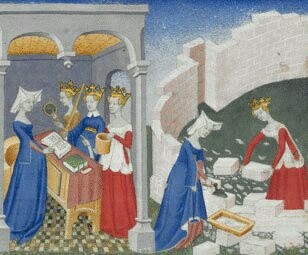
One of the biggest myths and misconceptions that drives me nuts is histories view on women. You know the weak, stupid and useless damsel in destress image. Now there are definitely a few women who have never fit the mold but it hasn’t helped the image anyways though it is starting too. Cleopatra, Godiva, Queen Elizabeth I and II, Jane Austen, the Bronte sisters, and so many more. These were strong women who made their mark on history but what about those who didn’t. We are learning more about them too. Images of medieval women working in men’s labors alongside men or even seemingly on their own. Records of women who took over their husbands business after their deaths. A recent relook at bones of Viking warriors were found that the armor did not make them men (like the original scientist thought) but in fact at least half of the bodies were women who clearly did some fighting. Some cultures that were thought to be patriarchal societies are proving to be equal, or matriarchal societies. Most of these like many Native American Tribes were seen as patriarchal because of a patriarchal society (the English) trying to make sense of what they found.

A women’s life was difficult and often oppressed but images such as these may hint that some women worked outside the strict lines of their gender. This image is from 15th century Italy.
Then there are the images of women couldn’t make it on their own. The term spinster comes from the women who did. Many women who never married or became widows took up spinning to help take of themselves and the term spinster was given to them. Many knitted or sewed to keep a roof over their head. For those that lost their husbands, like I said some took over the business. In The Return of Martin DeGerre, a book based on court records from a family in France gives an amazing look at not only a peasant family but a women’s lot. When a women’s husband is sent to war she continues to work alongside her family on the farm. (This is also about how she got duped by a stranger who claims to be her husband, which is why there is a court record.) And Queen Elizabeth served very well unmarried.

Women carding, combing, spinning and weaving wool in the 15th century.


Women are strong, brave and just as important to look at. A commercial for Dwight D. Eisenhower talked about how housewives were the backbone of America. They fed the family, made sure the children were cared for, managed the household finances and helped to educate the children for the future (the commercial’s words not mine). Women are as much the reason why our culture and our world is the way it is. So no matter how much we can be a pain in the rear and how many other problems we may have cause (Troy anyone) we are as important to remember when looking at history.   

Women worked full time and made up a majority of the work force during World War II. Many feeling independent for the first time pushed to give women the right to work. Until then it wasn't a common sight and the concept is still less than 100 years old. Before this it was extremely rare for women to pursue their own careers.