Tuesday, September 29, 2015

Chalk it up

Alright one of the most useful tools in a seamstress’s arsenal, (and one of the least likely to work) is sewers chalk. There are a few varieties which you can by, all with their uses.

The first is paper, and wheel. Only been around at least since the 1950s (I have some of my grandma’s I can date to around then) it is used to transfer patterns on to cloth. It can help you mark where darts are or where sleeves are to be placed. This of course only works if you remember to make the marks before you remove you pattern. The paper only works though if you have a spiked wheel that you run over the pattern to transfer the chalk.


Then there is actual tailors chalk, commonly found and sometimes useless. I have had many that just would not mark well. Usually in a block/square form they tend to come in three colors, white, blue and yellow. This is the oldest version.


Next you have one I came across a few years ago and it is the one I use most often. It is a refillable pen made by clover, you fill it with the chalk color you need, (yellow, blue or white) and then little nibs that roll transfer whatever you are drawing on to the
cloth.


Of course there are also pencils.  Simple, cheap and look like this.


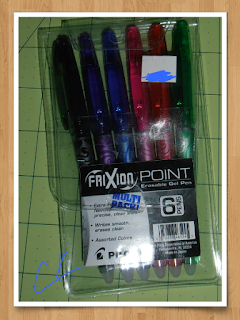
The other one I use a lot is friXion Point erasable Gel Pens. They erase easy, dispear with heat so if you forget to remove it before you iron it no worries. They also come in six colors so no matter what I am doing I am not worried that it might not work.


Useful tools for useful trade… The secret have as many as you can in different colors makes the work easier. 

Monday, September 21, 2015

Put a pin in it.

Decorative, beautiful, simple, handy, and useful they hold a rich tradition. Coming in all shapes, colors, and sizes who would think a pin cushion could be so complex. Alright they are aren’t that complex, they are a bit cloth stuffed with wool, cotton, scraps of cloth, maybe some wood dust and whatever else might be handy. The most common shape is a tomato. This may come from a Victorian era tradition I heard about but haven’t been able to track down the original source, of placing a tomato on the mantle to bring your new home good luck. In the winter tomatoes aren’t as plentiful so a cute little stuffed tomato would work. Then what to do with it, stick a pin in it.

My ever so useful pin cushions. ..


I have pin cushions shaped as shoes, I have two tomatoes, a turtle and little blue ones of wool that I made, and sometimes I use the arm of my chair briefly (I am sure my grandma is shaking her head on that one.) I even have one that holds small scissors. These useful tools were common in every house up until the 1960s and I wouldn’t be too surprised if even people who say they don’t have one, do. It is probably hiding somewhere in their attic and they don’t know about. Seen in paintings from just about every era in all different sizes not a lot exist from before the Victorian era but they were used.

Pincushion with place to store thread spools.


Unfortunately for us the things that get used don’t always leave evidence behind. So here is to that handy recognized tool. Off to put a pin in it.  

The Vergin Sewing, sewing pillow in her lap, pins may be in it. 1560


Tuesday, September 15, 2015

Sewing hint 1.

Helpful hint: Be kind to your trash man…


When throwing away broken or bent pins and needles do not throw it straight in the garbage. Take the plastic gum containers or altoid containers and place it next to your sewing machine. When it is full toss it the trash. 


Tuesday, September 8, 2015

Down to my drawers.....

So in the basis of presenting a good representation of period clothing starts not with the outside but what you wear under the garment. To get the appropriate look you need a good foundation just like with anything else. In Regency era it starts with the shift or chemise (if you want to be fancy.) Its job is to protect your clothing from your body. Yes you read that right. Its main purpose is to keep your sweat from your outer garments. It was short sleeved at this time and would remain so going into the early 1900s. Originals seem to appear that they go to just above ones ankles which is where they had been for the last 1,000 years. They were loose and seem to be gathered at the top, tied at the top or buttoned at the top and made of cheap cotton. You would have more of these in your wardrobe than any other garment, usually enough to get you to the next laundry day. The one that I am going to try to recreate is below.

MFA Boston


Next was your bodies or stays also called a corset. Generally made of canvas, it might have a small amount of boning in it to help give you support. The idea during this time is to give your breast not only support but oomph. More so then any other period before. This would be your tightest clothing. They shapes and styles varied and what you chose probably depended on what you needed. More support maybe it would be a bit longer. This time period was going for the Grecian look so if you filled out your dress more you might go for the longer too to help unify your shape down your hips. If you were older and you were raised in the 1790s you may also be more comfortable in this style so while on the outside you still look 1820s you still feel the support you were used to in the 1790s. I can’t tell you who would wear what because undergarments aren’t generally depicted but from surviving examples they do appear more common.

Metropolitan Museum of art


I am going to recreate a different version though. I am going for the short stays. While supportive they end just underneath my chest (or lack there of). These are also called half stays.

Muesse Galeria Paris


Next are the panteletts or drawers. They were opened at the crotch so the woman could relieve her self and first came into play in the 1700s. Ending about mid calf with a little lace and made of cotton again.

Vintagetextiles.com


Of course there are the stockings, if I have time I am going to knit myself a beautiful red or white knee high pair and a pair of white garters. If I don’t have time (which seems more likely) digging for my blue pair I used to wear  when I was doing Civil War reenacting.

MFA Boston


There is also the shoes. Here is what I will be on the lookout for.

Victoria Albert Museum


Till next time here’s sewing with you.

Sense and Sensability Patterns


Monday, August 31, 2015

Wax on....

When one is sewing there is a material that is used often but not thought about so much in modern sewing. I use it more when I am sewing with linen, pure cotton or wool thread. You don’t really need it when you are working with polyester and other acrylic fibers but when working with natural fibers it helps to keep the natural fibers together and prevents breakage while you are sewing. It is a material found in nature, can hold its chemical makeup for years and is edible.


The answer… beeswax. About 6 to 8 pounds of honey is needed to produce one pound of wax and the average bee collects less than a gram in its lifetime. It will visit between 50-100 flowers a day flying around 15 miles and the honey it produces is the only thing that we eat from insects. (Other than insects themselves.) Beeswax is water proof and isn’t just good in sewing. It can be eaten, used to seal food, clothing and just about anything else you want to make a bit more water tight. It is used to help with allergies and can be reheated and reused over and over again because it never goes bad or breaks down. It does have a melting point but even on a very hot day it won’t melt too much.
So here’s to the bees, there honey and their wax. Here’s to a cup of tea with honey and a sewing project with linen thread covered in wax.


Monday, August 24, 2015

Dress up....

Every year for the last couple of years I have made my own Halloween costume. Two years ago I was Snow White, then last year I was an Elf of Mirkwood from the Lord of the Rings. This year I left it up to my followers on Facebook. ( https://www.facebook.com/LostTraditions ) I gave them a choice between 1810-1820 or 1940s. They are two very distinctive years in fashion with very distinctive looks. Their choice was… drum roll please… 1810-1820 also called the regency era (1800-1820).

Dress  ca. 1810-1815  United States  Cotton, cotton thread, appliqued, embroidered  Mint Museum
Dress ca. 1810-1815 United States Cotton, cotton thread, appliqued, embroidered. Found at the Mint Museum

So let us look at this era.
 ~         War of 1812 between the United States and England from 1812 to 1814. Though the last battle takes place in 1815.
~          Napoleon invades Russia in 1812
~          August 24, 1814 The British burn down the U.S. Capital, A Rain storm helps put it out
~          September 14, 1814 Francis Scott Key writes the Star Spangled banner
~          April 5-12, 1815 The volcano at Mt. Tambora in Indonesia erupts causing a cold winter.
~          June 18, 1815 Napoleon is defeated at Waterloo
~          July 14, 1817 Construction begins on the Erie Canal
~          Jane Austen writes notable work

Evening dress ca. 1812 From the Museum at FIT via Fashion Plus...
Evening dress ca. 1812 From the Museum at FIT via Fripperies and Fobs.
So that is what his happening at the world so what things are housewives are doing. Well in that regard things aren’t much different from the following and past centuries. They are cooking, baking, sewing, knitting, embroidery, studying music and so much more. Of course what they are doing is totally dependent on their station. Jane Austen's own books helps give us insight as to what women were doing.

French muslin dress embroidered with metallic thread. Detail of embroidery. c1810 Met Museum

What are they wearing? Long muslin gowns often with a thing muslin overlay with fine embroidery. Abigail Adams wrote to her sister in regards to the new fashion “I could not but lament that the uncovered bosom should display, what ought to have been veiled… I wished that more had been left to the imagination and less to the Eye.”[1] Made of wool, linen but mostly made from thin cotton they were very different from the late 1700s and while other centuries had more of a gradual change, this Grecian inspired style made waves with plain skirts bordered with ruffles, flounces, puffs, pleats and embroidery.

1810ish Regency gown of tamboured India muslin, V&A ----- This is, so far, my favoritest Regency dress. I want it soooo badly!
1810ish Regency gown of tamboured India muslin, Victoria and Albert Museum

So as I do some more research a few things I am going to be looking at in regards to this era undergarments. I will need to make a shift, a Stays (corset) with a style that helped to make the “bosom” a little more eye raising. If I have time and am brave enough I may even see about knitting socks and making pantaloons. While the shift will be made of cotton muslin, the corset will be made with canvas. I will also be stepping away from the period appropriate baleen from a whale for modern steel boning. The main garment will be either of cotton with a fine satin silk overlay (or closely resembling as much as my budget will allow) or wool. On that regard I haven’t decided but hey I have two months… right? Shoes and hat, will be another thing I will need to address as I research the era.

Progress of the Toilet: the Stays, etched by James Gillray (1757-1815) published by Hannah Humphrey in 1810 (etching): Despite the ideal of body-revealing draperies, the fashionable, willowy silhouette of 1810-20 was achieved by hip-length boned stays (Gillray exaggerates the length). To maintain the narrow line, drawers were sometimes preferred to layers of petticoats, but did not become general wear until the 1840s.
Progress of the Toilet: the Stays, etched by James Gillray (1757-1815) published by Hannah Humphrey in 1810 (etching). These stays are greatly exaggerated most I have seen end just under the breast like today's or to just above the hips like many that are seen in prior eras. 


[1] The DAR Museum, Martha Pullen’s Favorite Places Series. The Martha Pullen Company; Alabama, 2009. P. 70

Tuesday, August 18, 2015

Darn it...

So in recent weeks, ok it has been the last two months, I have been trying to track down the history of darning. Darning is the skill of repairing knitted and woven items to try to remake the damaged cloth. So far my search has been, well to put it kindly or maybe not so kindly a pin in my seat cushion. I have mentioned before but when it comes to women’s work and daily activities it is often difficult to track down not only the history but the proof of history of something. Darning is definitely no different.

Oh, we know they are doing it. Why? There are a few examples of what little clothing examples still exist. There is a shirt that has plenty of patches. Sure they don’t get mentioned in documents. I mean anyone who is wearing patched clothing can’t afford a painting, or is too poor in class to be of any interest to someone writing the history of civilization.  Yet with cloth is so expensive you will work hard to pay for cloth so if you can take old cloth and patch where you can it might go a bit further.
Cloth is extremely expensive up until the industrial revolution. In inventories of homes cloth can sometimes equal 1/10 the price of one home. Today we might spend $100 on a suit. Sometimes we might get something repaired if it rips or tears but more often than not we just toss it out. When cloth and clothing is expensive though we are more likely to do everything we can to repair and keep things looking either as good as we can or as useful as long as we can.

1930's vintage photo, woman darning a sock.  My granny taught me how to do this, using a darning egg.
A woman darning a sock in the 1930s. from Hub images.

So what is darning? Well if you are luckily you catch the hole when it is small and if it is woven cloth you will just reweave thread or yarn over the thread worn cloth or knitted item. If you’re not as quick to find the wearing thread you might find your work a little more taxing, either patching the garment. If you have knitted piece the darn is basically a reknitted section that might take you a few moments or might take you what feels like forever.

'Swiss darning'; in the example above you can see how to fix a hole in a knitted cloth,
Swiss Darning technique as seen in many magazines and book from the 1920-1960s, that helped women "keep a better house"
Though I am still looking at paintings and have emailed museums to see what they may have available the tools used are a little harder to track then darning themselves. Needles we know they had, double pointed knitting needles were widely in use at least starting in the 1300s. Sewing needles made of wood, bone and metal are available throughout the centuries. There is another tool I use as well when darning. It is called an egg. I use it to stretch the hole over. Some actually look like a leg while others look like a ball, and still others look like little wooden feet. Some do have handles while others don’t. So far I have only been able to date them to at least one painting done in Holland in 1817. As for the mention of it in the written word, I’ll let you know as soon as I find it.

Woman Darning Socks by  Adrian de Lelie(Holland1755-1820)_1817
Woman Darning Socks by Adrian de Lelie(Holland1755-1820)_1817 see the darning egg on her lap, scissors on the table and the sock on her hand.


However if you know anything about the history of darning or know of somewhere I might look, I would appreciate it. Meanwhile I am going to ignore the research headache brought on by the fact no one talks about everyday life. 

Tuesday, August 11, 2015

Worming around....

There was a television show when I was a kid about a Cat that lived in the Emperors Palace in China. There was always one episode that stuck with me. The Emperor’s wife was in her garden and noticed all the pest in there; birds, worms, bees, and fish. All of them had done something to offend her. The bird woke her from her nap, the worm fell into her tea, the bee stung her, and the fish splashed her (If I am remembering this right.) In the end she banned all these creatures. As the story progressed she learned of her mistake, the birds produced an ingredient for her favorite dish bird’s nest soup, the bee made the honey for her tea, the fish ate the bugs in her garden and the worm, yes the mighty worm made her clothing. Beyond the moral of the story that everything plays a part in the world we live in it is the worm that has my attention for this blog.

Silk moth on cacoons of silk worms. The pod is what we use for silk.


That worm is in another story, again of a royal member of the Emperor’s family. The story is that in 2,640 B.C Empress Si-ling was sitting under a mulberry tree in the palace garden with a cup of tea. A small white pod fell into the tea and as the warm tea loosed the filament it began to unwind. She realized that when spun it could be woven into fine garments. She was then made the “Goddess of Silk” and Temples were built in her honor.


Silk is still processed in this way, boiled to loosen the filaments and then torn apart and spun . A female silk moth produces between 600 and 800 eggs and can lay dormant for up to 2 years. Mulberry is their preferred food source though they do like lettuce but it does lower the quality of the silk. The source of China’s silk was a closely guarded secret as well. In fact when one of the Princess of China married an Indian prince she snuck the silk worms and mulberry seeds out in her head dress. Emperors of Rome believed that the Chinese’s just combed the silk fibers out of the ground. Eventually the secret was discovered and now it is wide spread. Some spinners even spin it for fun, including yours truly.

Me preping and spinning silk.


You can buy it in two forms, the first is the pods but then sometimes as you pull them apart you come across a little body of the worm that made it. It is best to loosen the filament while the worm is inside because then you are more likely to get one long piece of silk. If you clip the end you and dump out the animal, you can some shorter fibers and some longer but if you let the moth eat its way out now you have a lot more short fibers and not a lot of long ones which will make a thicker silk yarn.

Feeding silk worms mulberry leaves in Japan.


So there you have it silk, one of the most desired and longest spun fibers of the world. In Rome it would cost the same to buy a bolt of silk as it would to buy gold. Who knew a little worm could be so useful and expensive.